
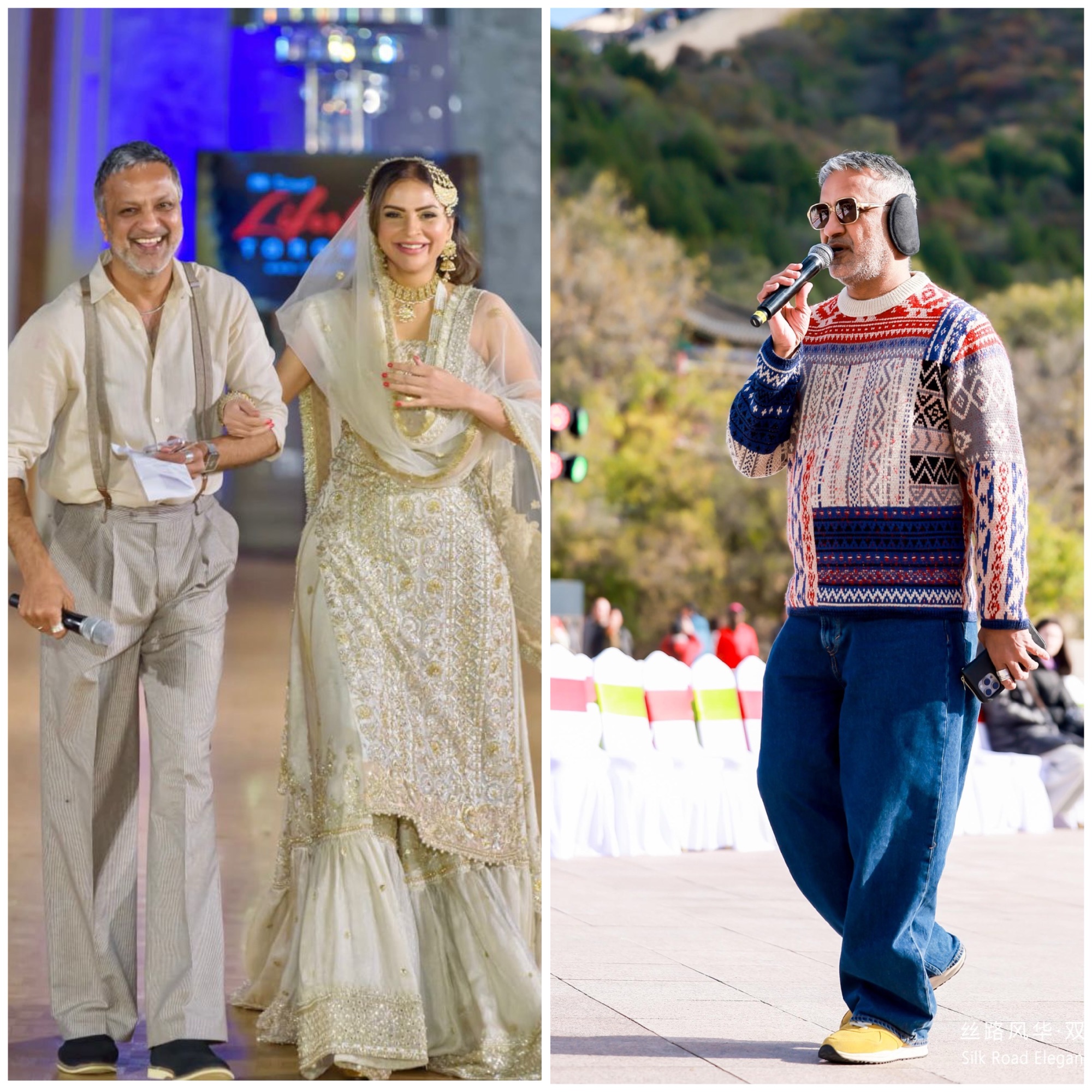
When Riwayat began their journey fifteen years ago with Adnan Ansari at the helm of it, it was a brand that weaved the finest and most unique silhouettes of the time. With an eye for immaculate detail and a vision for unadulterated style, Adnan Ansari couldn’t quite shake off an itch for more. That was when he journeyed to the United Kingdom sixteen years ago and began his quest for what more was. With one chance glance of a Pakistani outfit being showcased at a show in London along with an idea that simmered all the while he was on the train, it was then that Pakistan Fashion Week was born and has since been at the very center for promoting the most decorated and upcoming names in Pakistani fashion. We sit down with the CEO of Riwayat UK Ltd and PFW Adnan Ansari as he recalls his journey and how fruitful these past fifteen years have been along with a chat on their latest show happening on the 29th of January, 2026 with the support of the High Commission of Pakistan.
1. We’ve been seeing quite a bit of buzz surrounding your upcoming show in London. Tell us what we can expect?
It’s going to be a different show that we used to do when we started. We had lots of segments that revolved around menswear and womenswear. There’s nothing off the rack. The designers are coming with their collections that they’re making especially for our show. PFW has always served as a platform that highlighted trends that were both classic and contemporary. Our shows have always been serious and dedicated towards the forward way of fashion. We’re celebrating our festive seasons which are all encompassing on all cultures. The emphasis is on Ramadan and Eid.
2. Given the fact that your shows take place abroad, what kind of diversity do you see in your events?
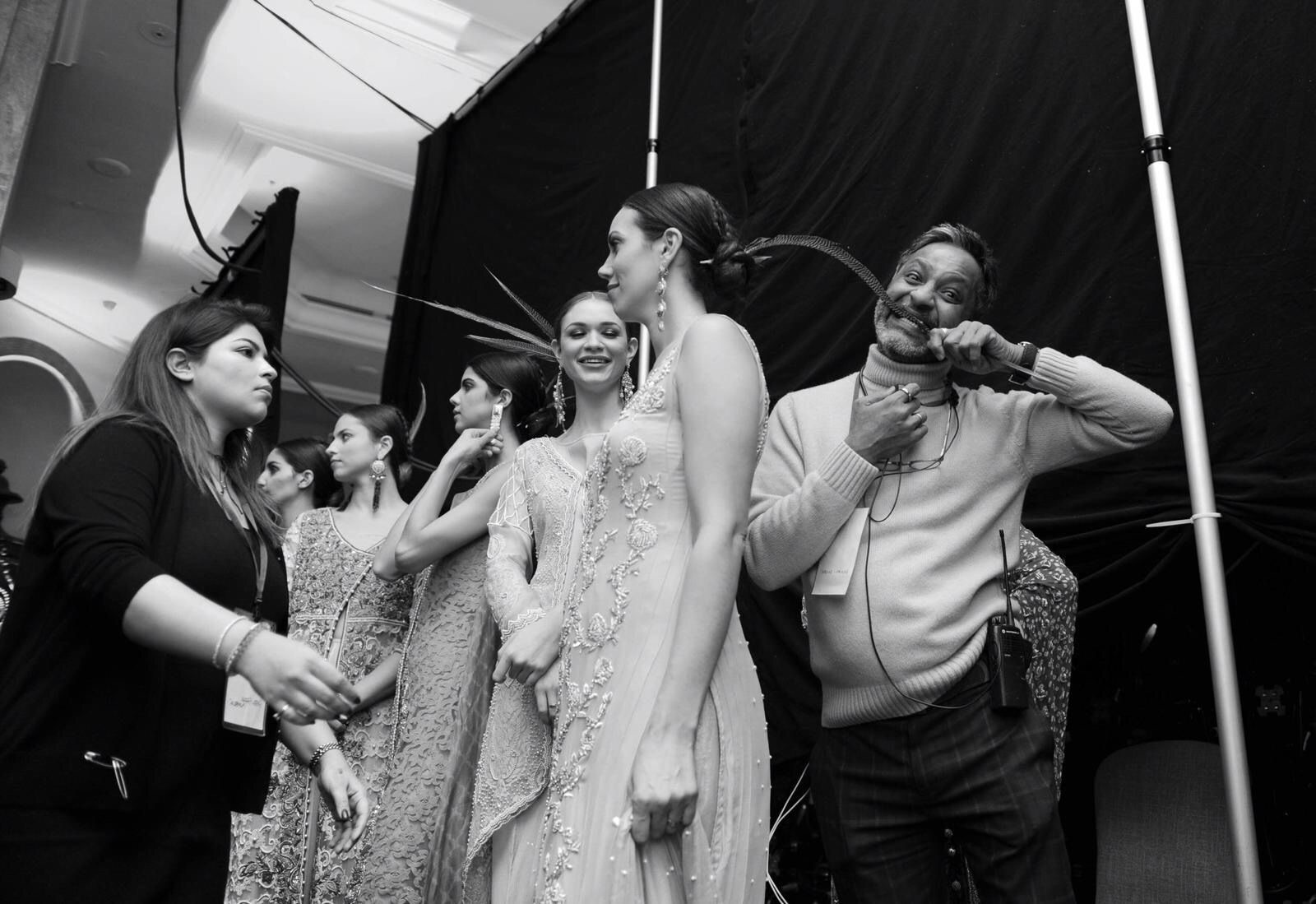
Diverse people come for the event? 70% of our viewership is south Asian and 30% of it is white and black. That’s in London. The high end and corporate events consist of the multinationals which consist of a mix of various nationalities. The whole point is to represent South Asian fashion and I always opt for models that are international to show the flexibility of our culture and how its welcoming spirit can attract all nationalities.
3. How would you describe these fifteen years? What are some of the ups and downs you had to face while growing?
So I moved to the UK sixteen years back and I thought I was going to live a quiet life. But I’m an artist. Someone who has a wild curiosity. And that couldn’t be put to bed. I love challenges and I can’t sit still. I compete with myself and I’m a strict perfectionist and that’s communicated through my shows. When I went for job interviews, I did face a few rejections. One day I saw the Metro newspaper while I was on the train which highlighted a show that had a Pakistani outfit documented. It was then that I had the idea to start PFW. I had utilized my connections and began to begin the process to execute it. I went to a few shows prior to understand the whole process and I was floored at how visionless the South Asian designers were living abroad. I then envisioned something that would bring our culture in the most enriching way and I had designers such as Sana Safinaz, Zainab Chottani, Fahad Hussayn etc. My first show was challenging because of lack of funds but everyone showed up to volunteer for the sake of fashion.
4. Tell us about your first international show. What would you say has changed since then?
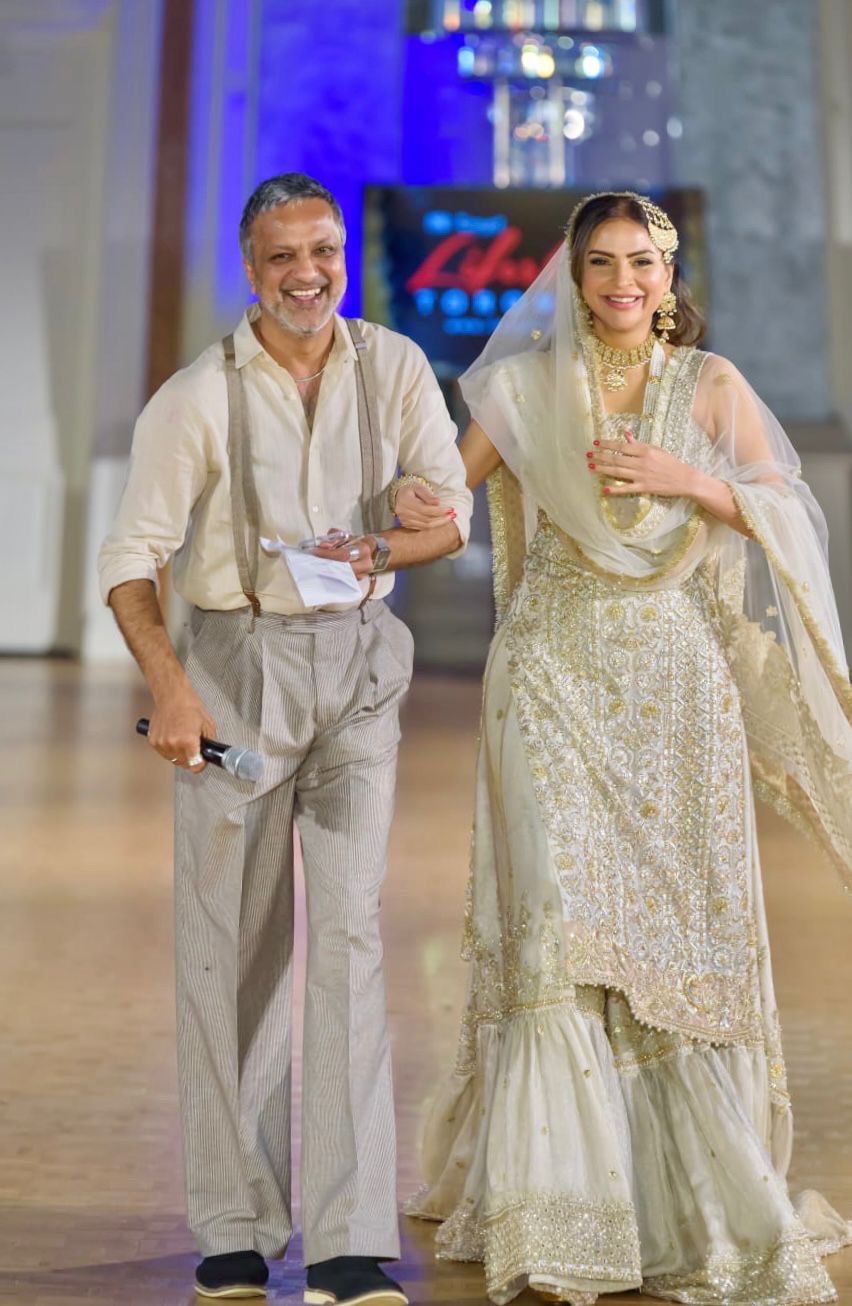
I did my first international show in 91 in Russia as a designer. However my first production was when I moved to the UK and it was for the Pakistan embassy where Rizwan Beyg, Maheen Khan and Shamaeel Ansari showcased their clothes. That show is what gave me the confidence that you can do this long term in the UK.
5. You’ve directed shows in Pakistan as well as the global stage. What vital piece would you say is missing in local shows?
The first thing is professionalism and punctuality and respect. Whether it’s the spot boy. The make up artist. The light man. Designers need to understand that it doesn’t matter who your opener or showstopper is. Your product matters. There has to be unity in what the show stands for and respect for the organizers who curate the whole thing. If the show gets hype, they get the hype. The egotistic mentalities have to go!
6. What would you say defines a designer to be reckoned with?
For me a designer is a couture designer like Chanel, Lagerfeld, Dior. They’re retailers now but what I believe is quality over quantity. When I was a designer I’d design 30 pieces that would be spread out over the span of 3 months to ensure there was a sustained quality. Nowadays there’s no signature that’s attached to their brand. There has to be something that makes your product stand out and I don’t see that passion to stand out anymore.
7. What advice would you offer to young Pakistani’s looking to immigrate to the UK?
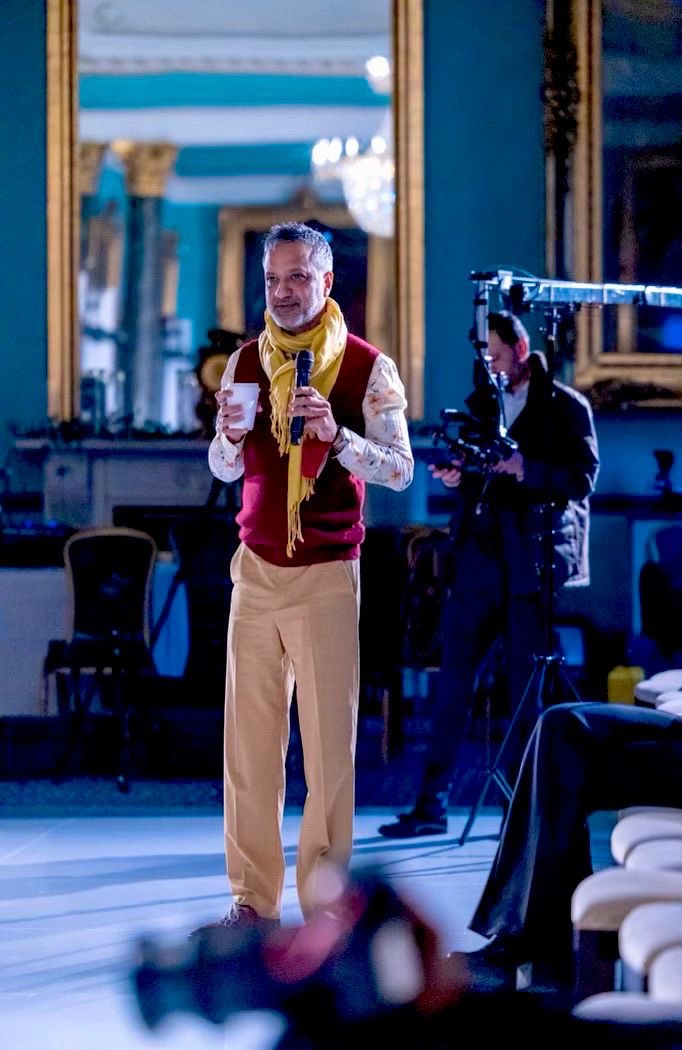
To be very honest it’s not that difficult. If you’re smart enough to adapt yourself to the current situation and trends, you can survive anywhere. I still know my product. I still stand out. I have a standard that I’ll never compromise. The minute you join the rat race, you lose it. I refuse to run someone else’s race. I think big and stay that way. That’s why my venues are different. I use cultural locations that accentuate the look and feel of a show. We have to be able to think big and not remain stagnant.
8. From starting Riwayat fifteen years ago, the world climate was different in comparison to what it is now. What are some of the challenges you faced as a Pakistani man to establish your headquarters in the UK?
The first thing is that if they’re not doing anything in Pakistan they won’t do anything abroad. If you can’t thrive there, you can’t thrive here. It’s not easy to live here because of the global climate and the financial crunch, so you have to think ten times and do your necessary research. Gone are the days where you land up somewhere and explore. You need to have a plan.
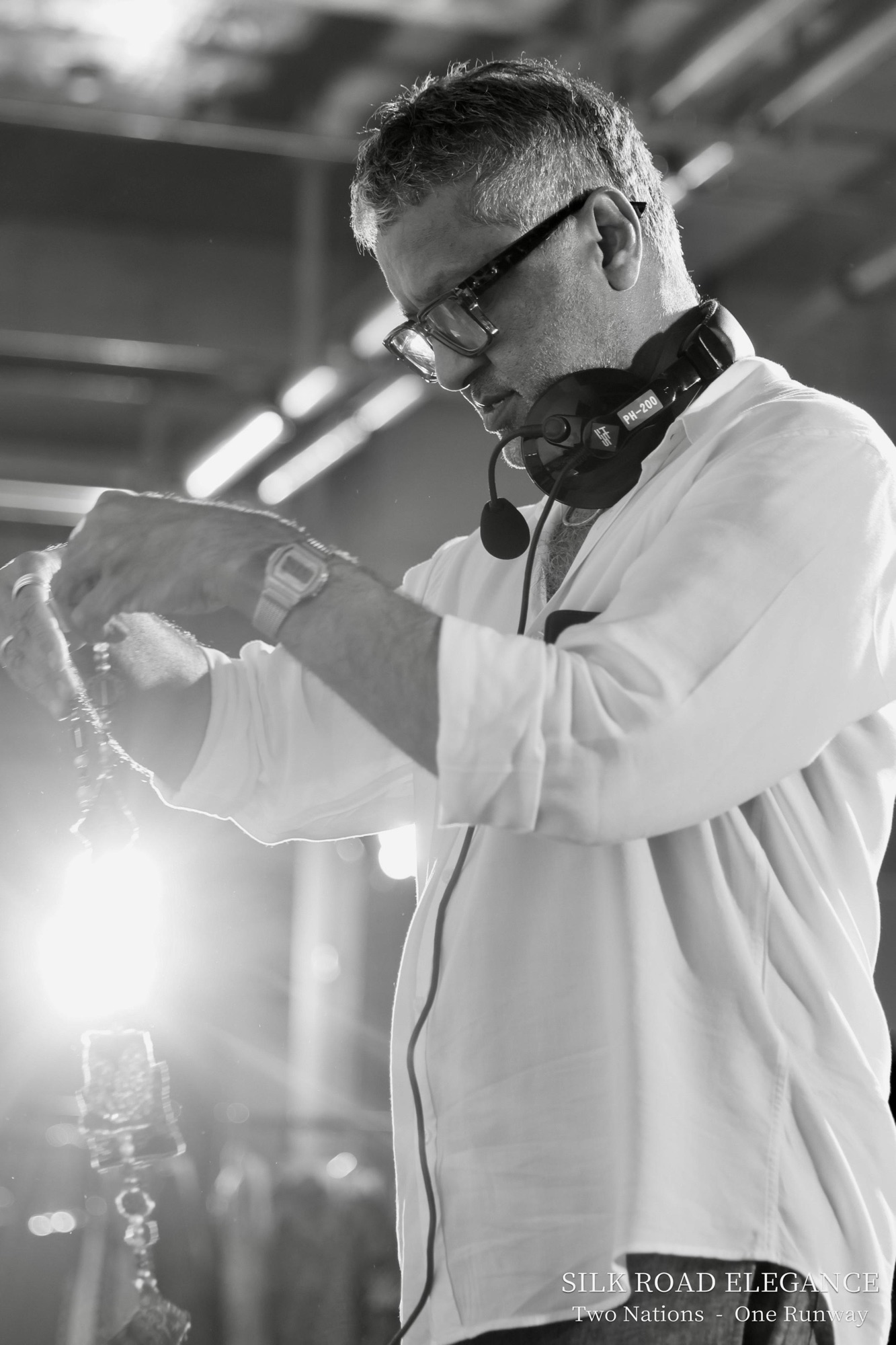
View this post on Instagram
9. They say that fashion has passed on in numerous ways. Do you share that same opinion?
Yes, in Pakistan. Fashion has many stages and now fashion has become a lifestyle. Before that wasn’t the case. It’s different now. For me, fashion accentuates your identity. But now, everyone has decided to follow the crowd and not get their own identity through their style. Fashion is something inside you. It’s the confidence that matters, not the clothes. In our days, less was more. I miss those three piece Gul Ahmed prints. Now all I see is a sea of overly embellished outfits. There’s nothing plain and simple. If one has done it, ten others decide to copy. There’s no originality and no security. Color combinations are out. It’s all very jumbled.
10. In your opinion, what will it take to revive fashion?
It’s the concept of the fashion shows. It’s a serious thing. It’s not some carnival. It’s a designer coming and showcasing their creative image through a new collection just for the ramp. I would want the unadulterated version of fashion to be brought back, and that’s why I’ve encouraged new brands to come on who I personally feel are passionate about reviving fashion as much as me.
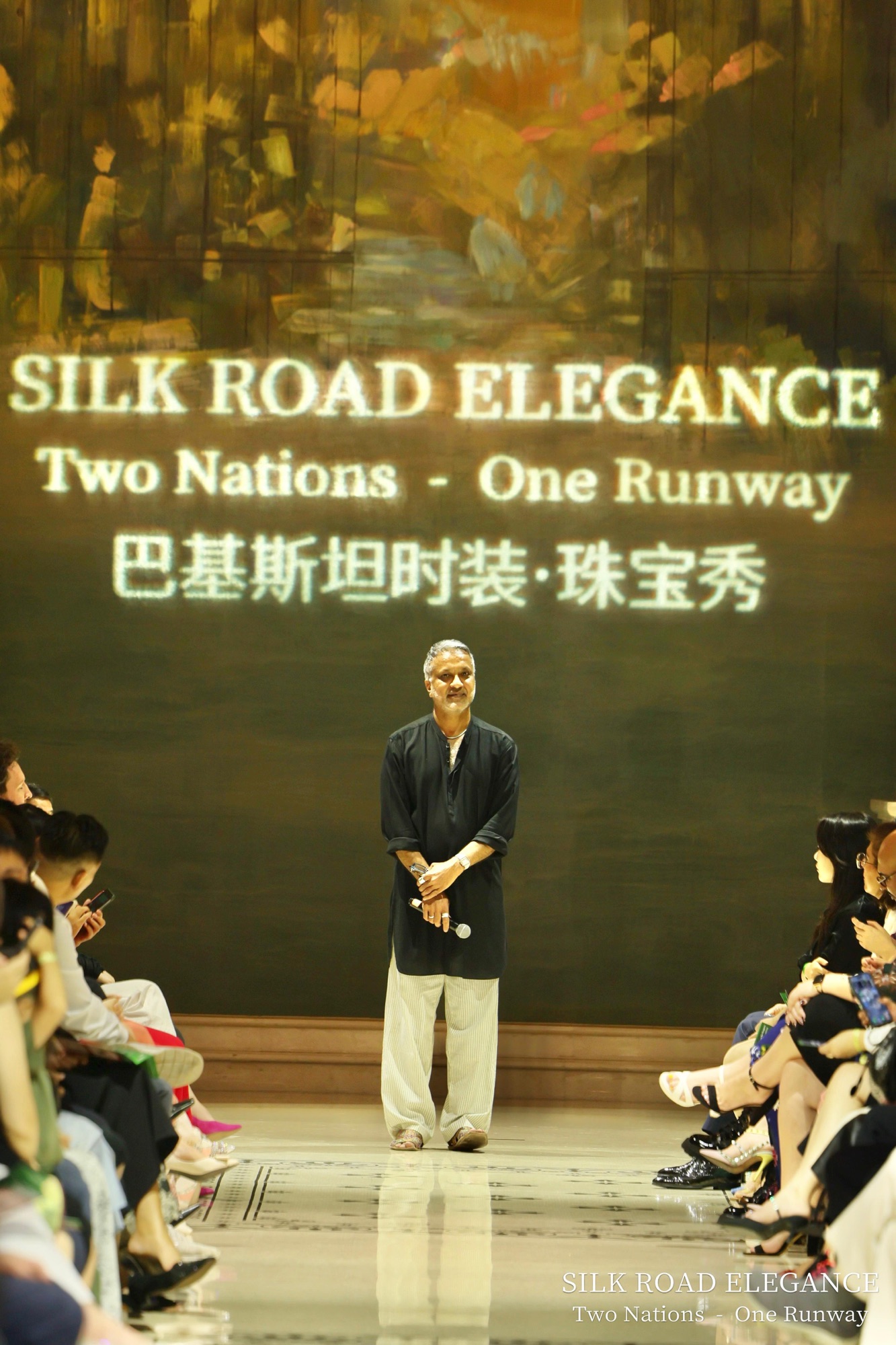
11. If you could pick one thing to revive that you’ve seen and experienced in your fifteen years of Riwayat and PFW, what would it be?
I want myself to grow even more! I want the fashion to come back. The councils to come back. I want for there to be something that revives a platform that designers can feel confident in. There has to be room for each branch of fashion to shine, from bridals to pret. So in the coming fifteen years, I want for people to come and see their talent can push the needle forward. I hope for our fashion to go global because there really is so much potential.
12. Digital runways are slowly becoming the next thing. Would you agree?
Digital runway as a concept can be seen as anything. But a classic fashion show is like a book – it’s not like Kindle. There’s something of substance when there’s a show where you can meet, execute your vision, make your connections and enhance your business. It’s a new trend that can honestly be anything – a TikToker making a video in their room can be considered that. Digital runway’s lack that aura and that experience of seeing the buzz and energy that only live shows can bring.
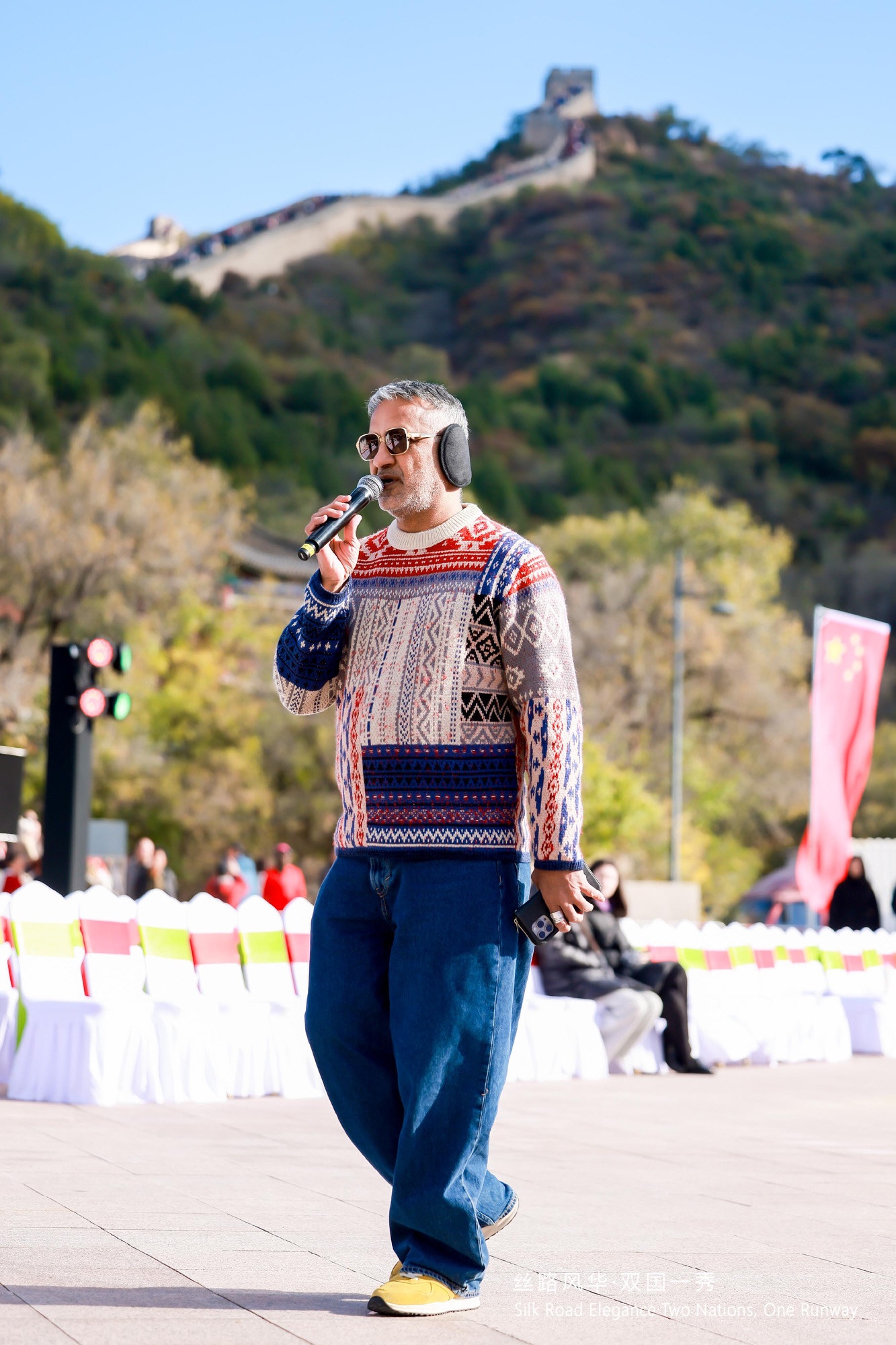
13. You seem to be on the move constantly – from wrapping up a show in China to organizing one for London and then Canada. Are you one to delegate responsibilities?
I was a control freak but I’ve learned to delegate. I still do oversee everything myself because I’m very possessive of my vision. As an art director by profession, I have worn many hats which leads me to be able to put my hand in the responsibilities of others and say I can do it too. But I do have a good team that understands my vision. It took me these fifteen years to trust them.
14. What is the feeling you feel once a show is over? Is it gratification or another layer of more stress of what’s next?
It’s both! Gratification is there because it’s like ok the show is over. I still do take out flaws that happened because as I said I’m a control freak. I already have my calendar sorted for the next year, and who knows, I may just revive my clothing brand to save fashion!
15. Who are some of the designers that you’ve enjoyed working with?
I enjoy working with everyone. I’m a people’s person and I learn from everyone. Different personalities. Different visions. Can’t just pick one. The designers who know me and who share my vision are the ones I enjoy working with.
View this post on Instagram
View this post on Instagram
View this post on Instagram
View this post on Instagram
View this post on Instagram
16. How would you say Pakistani fashion is represented on a global scale?
Pakistani fashion has made a big wave in the general fashion industry. You have Paul Smith making shoes based off our culture. The only problem is representation, and this is what I try to do with the platform I’ve made – to allow the foreign market to be introduced to the meticulous craftsmanship and innovation. It’s the representation locally that has kept it suffocated.
17. Do you feel with the advent of social media that it’s become more accessible to gain global visibility?
Yes absolutely! Social media has its pro’s and con’s. Its accessibility to be able to see a wide range of content is a good thing but it does run the risk of causing self-doubt. Don’t take it seriously and you’ll be fine.
18. Aside from Fashion shows and exhibitions, is there anything else that’s in the pipeline for the new year?
Yes! We’re going to hopefully be going to Oslo, Australia, South Africa. We’re starting a series of theatre plays with Pakistani writers plus art exhibitions with young artists. It’s not just going to be fashion. It’s going to be an amalgamation of the arts as a whole. I’m super excited about this.
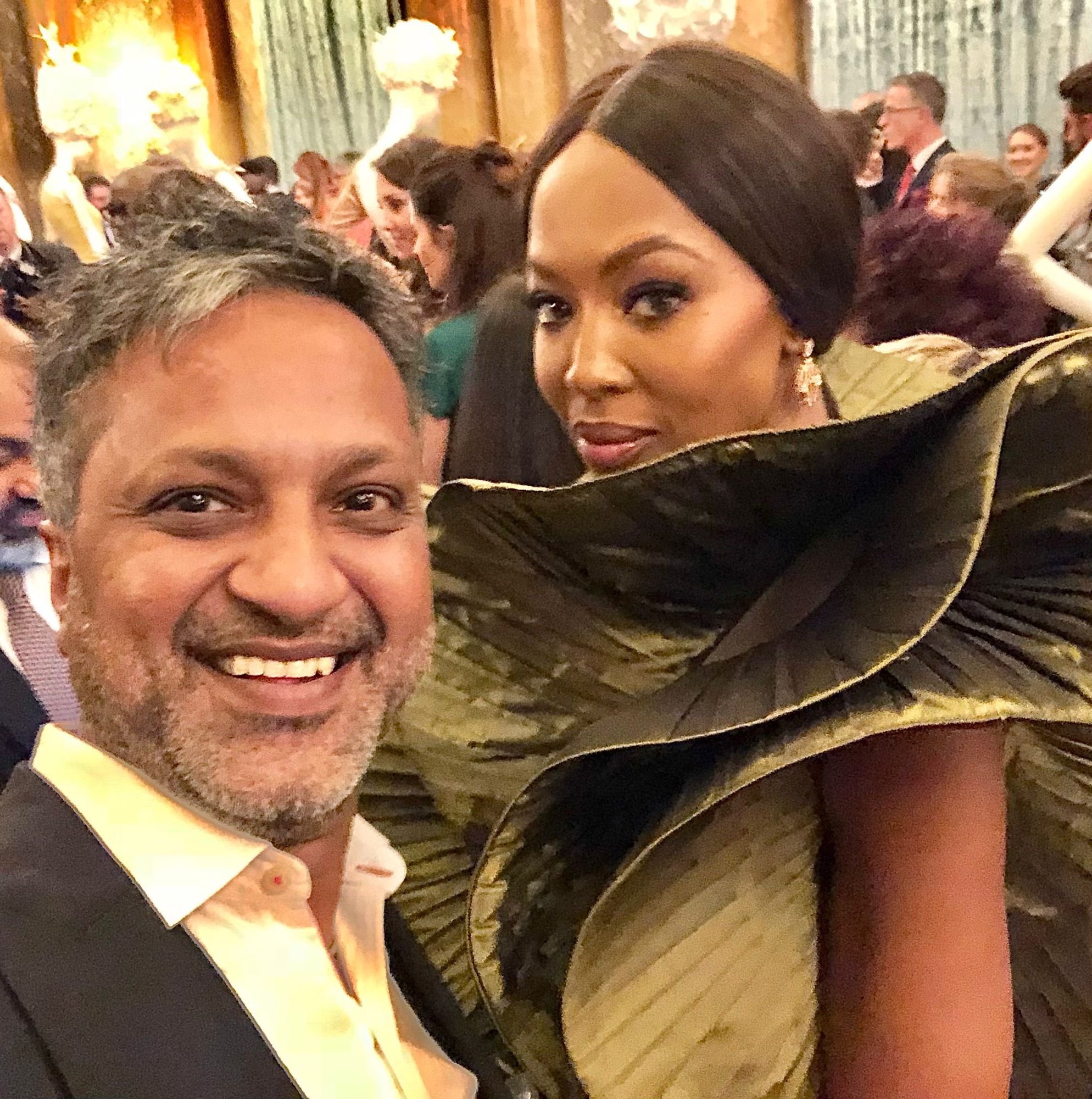
Note: PFW Fashion Show will take place on January 29th, 2026 at St. John’s Church in Hyde Park followed by their Exhibition on 31st January, 2026 at London Grosvenor Square.